
x
u b i x a

Non-Destructive Testing

Non-Destructive Testing is used to evaluate properties such as strength, durability, crack depth, and rebar of newly built/old structures without causing damage to the structure.

Rebound Hammer| Ultrasonic Pulse Velocity| Half Cell Potentiometer| Rebar Locator
Concrete Mix Design
High Performance Mix

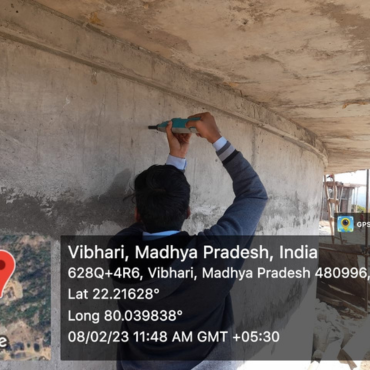
Rebound Hammer Test

Ubixa Testing Laboratory offers the Rapid Chloride Migration test of Concrete, which is conducted in accordance with NABL standards. This test provides crucial information about the durability of concrete in chloride-rich environments, helping clients assess and mitigate the risk of corrosion in their structures. Our experienced and qualified team uses state-of-the-art equipment and up-to-date testing procedures to deliver accurate and reliable results, ensuring the safety and longevity of our clients' concrete assets. 00°F

  • 1. The Rebound Hammer test serves multiple purposes, including:
  • 2. Assessing Compressive Strength: By establishing a correlation between rebound index and compressive strength, we can estimate the likely strength of the concrete.
  • 3. Evaluating Uniformity: The test helps determine the uniformity of the concrete, ensuring consistency in quality throughout the structure.
  • 4. Quality Assessment: We assess the quality of the concrete based on standard requirements, ensuring it meets the necessary specifications.
  • 5. Comparing Concrete Elements: The test allows for a comparison between different elements of concrete, ensuring the quality of each component in relation to the others.
Normal Mix Design

Ultrasonic Pulse Velocity Test

Ubixa Testing Laboratory is proud to offer accredited Ultrasonic Pulse Velocity (UPV) testing services, adhering to the requirements of IS 516: Part 5: Sec 1: 2018. Our goal is to provide you with precise and reliable results.


  • 1. Homogeneity Assessment: We evaluate the uniformity of the concrete, ensuring consistent quality throughout the structure.
  • 2. Detection of Imperfections: The test helps identify cracks, voids, and other imperfections in the concrete, ensuring structural integrity.
  • 3. Monitoring Structural Changes: We detect any changes in the concrete structure that may occur over time, allowing for timely maintenance or repair interventions.
  • 4. Quality Assessment: The test assesses the quality of the concrete in relation to industry standards, ensuring compliance with requirements.
  • 5. Comparative Analysis: We compare the quailty of different concrete elements, ensuring consistency and compatibility between components.
Normal Mix Design

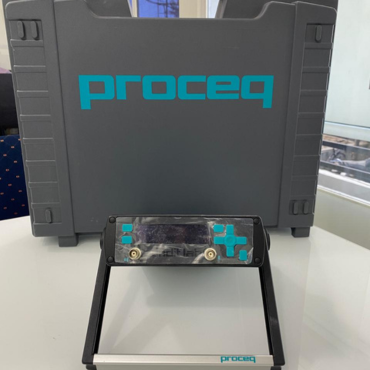
Rebar Locator


At Ubixa Testing Laboratory, we offer precise, accurate, and reliable testing for concrete cover depth and bar diameter. Our tests are accredited by NABL, following the requirements of BS 1881:204


  • 1. This test is used to estimate the position, depth, and size of reinforcement within concrete. It provides valuable information on their usage, applications, expected accuracy, and factors that may affect the results. Concrete cover refers to the minimum distance between the surface of embedded reinforcement and the outer surface of the concrete (ACI 130). The depth of concrete cover can be measured using a cover meter.
  • 2. Rely on Ubixa Testing Laboratory for comprehensive testing of concrete cover depth and bar diameter. Our expertise ensures accurate results, enabling you to maintain the integrity and quality of your reinforced concrete structures Crack Depth and Crack Bar Monitoring: Ensuring Concrete Integrity At Ubixa Testing Laboratory, we offer comprehensive crack depth and crack bar monitoring services for concrete structures. By accurately assessing the depth of cracks and monitoring the condition of crack bars, we provide valuable insights
High Performance Mix

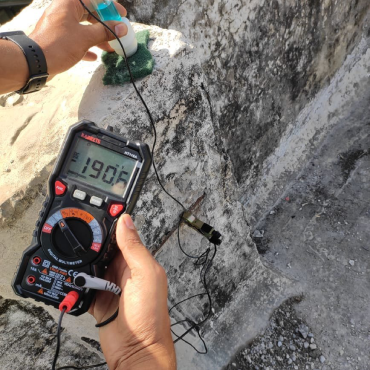
Half Cell Potential Test: Assessing Corrosion Activity in Reinforced Concrete

At Ubixa Testing Laboratory, we offer precise, accurate, and reliable testing of the electrical half-cell potential of uncoated reinforcing steel. Our services are accredited by NABL and comply with the requirements of ASTM C 876:91 (Reapproved 1999).

  • Objective:
  • The half-cell potential test estimates the corrosion activity of reinforcing steel in concrete. It helps assess the severity of corrosion, guide rehabilitation efforts, and predict remaining service life. Benefits:

  • 1. Rapid and Cost-effective: Non-destructive survey method for quick corrosion evaluation.
  • 2. Rehabilitation Guidance: Determines the extent of corrosion, aiding in effective repairs.
  • 3. Quality Assurance: Ensures the durability of repaired concrete structures.
  • 4. Service Life Prediction: Estimates the remaining service life, assisting in maintenance planning.